
Every Body Is a Dancing Body: My Journey from Learning to Teaching Accessible Dance
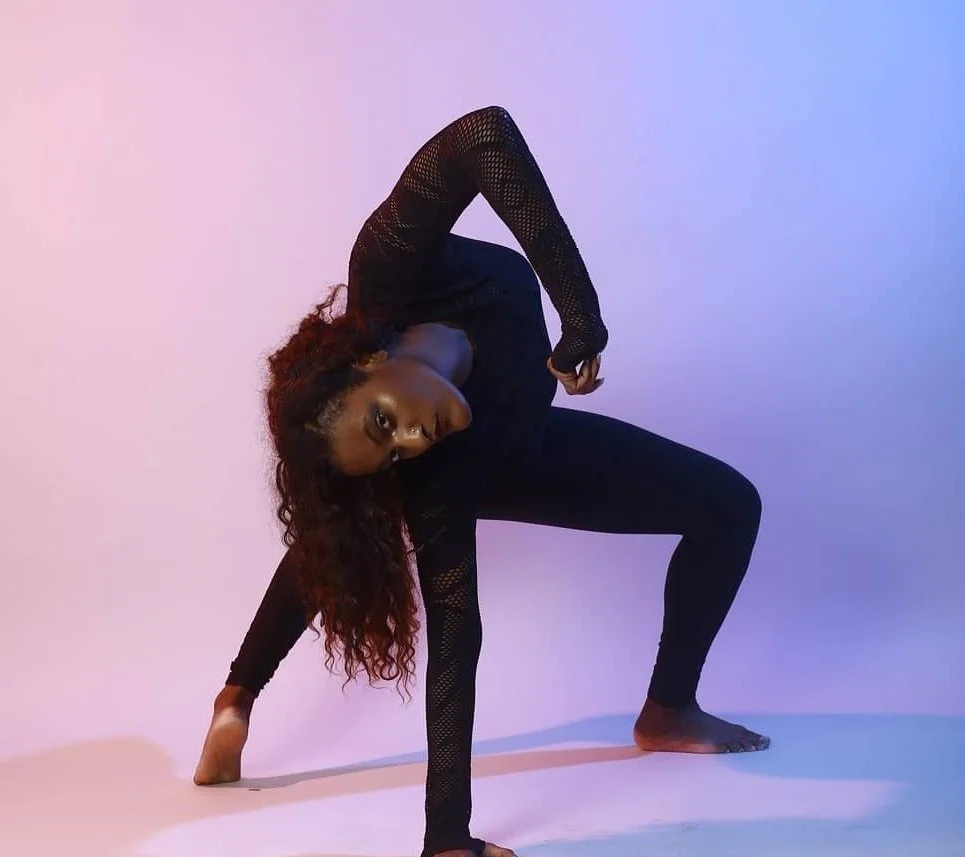
By Devin Hill
My name is Devin Hill, and I’m a professional dancer, choreographer, educator, and accessibility advocate. My dance journey began in childhood—quite literally as a pathway to mobility and independence.
I started dancing at the age of three under unusual circumstances. I was born with a rare eye condition called achromatopsia, which made it difficult for me to balance, walk, and even stand steadily at an early age. Many children begin dance because they show an early interest in music or movement. My mom enrolled me in dance not because she envisioned a future onstage for me, but because she hoped it might help me build balance, strength, and coordination. So I didn’t just grow up dancing—I started dancing to learn how to walk.
Dance became my first language, my first tool for navigating the world, and the foundation for how I understood my own body. From those first hesitant steps in beginner classes, my training expanded over the years into a deep, multidisciplinary education.
Through my adolescence and into my formal collegiate study, I trained in ballet, jazz, modern, hip-hop, tap, Latin, ballroom, African dance forms, Bollywood, Chinese dance, Mongolian dance, classical forms, improvisation, and contemporary fusion. Each technique sharpened a different part of my artistry. Today, while I teach across many of these styles, contemporary fusion has become one of my deepest passions—a genre that feels limitless in expression and deeply reflective of who I am as an artist.
So when Feel the Beat invited me to teach a Contemporary Fusion Workshop, I knew immediately that I wanted to create something that honored the full spectrum of embodied experiences. This workshop wasn’t just about learning choreography or exploring stylistic nuance—it was designed from the ground up to embrace accessible dance techniques and inclusive frameworks. My goal was to ensure that every dancer, regardless of sensory experience, mobility, neurodivergence, or previous training, had multiple pathways into the movement.
Some of the early planning for this class included choosing music with a clear, grounded beat that was easy to count and feel, crafting cues that would be meaningful across learning styles, and preparing language that was inclusive, descriptive, and free from assumptions about what any dancer’s body could or should do. I incorporated plenty of repetition throughout the sequences, collaborated with an assistant who could demonstrate from multiple angles and provide sign language support, and made sure all instructions could be processed both verbally and visually. I even tested the music through the bone-conduction dance floor to ensure that the rhythm and vibration were accessible to dancers with varying hearing experiences. Every decision was intentional, every element designed to build a space where dancers could enter the work with confidence.
Contemporary Fusion Workshop Breakdown
During the workshop itself, I introduced dancers to the foundational building blocks of contemporary fusion: grounded movement, fluidity, sharp accents, rhythmic play, and storytelling through the body. We explored transitions that blended contemporary release techniques with grooves and textures inspired by hip-hop, modern, ballet, and jazz. I wanted students to feel the elasticity of the style—how the body can shift from soft to sharp, suspended to weighted, fluid to rhythmic.
We also incorporated across-the-floor improvisation, using the bone-conduction floor as a tool to help dancers explore textures, musicality, and their own unique artistry in a deeply sensory way. Improvisation often intimidates dancers, but in this space, it became a shared exploration of sensation rather than an exercise in performance. Dancers were invited to respond to vibration, to follow the pulse, or to simply move from instinctive impulses without fear of judgment.
But the true heart of the workshop came from intentionally integrating adaptive strategies into every component. Dancers had options for seated, standing, or low-impact variations. Visual cues accompanied verbal instructions. Pathways were simplified or expanded depending on what each dancer’s body was asking for in the moment. Most importantly, I encouraged dancers not to focus on executing a “correct” shape, but on finding the sensation, intention, and emotional truth behind the movement. Accessibility wasn’t an add-on—it was embedded. It was part of the structure of the class just as much as musicality or technique.
It was crucial to build from an accessible foundation but also remain flexible enough for that foundation to shift at any time. Creating this class was not about perfection. It was about using every tool at my disposal—language, pacing, adaptive design, and empathetic teaching—to create a space where participants felt safe and supported in their exploration.
Engagement for Every Dancer
One of the most beautiful aspects of the workshop was how quickly the dancers connected with the style. Contemporary fusion allowed them to tap into both individuality and shared rhythm. Some dancers leaned into storytelling, crafting personal narratives through the choreography. Others found freedom in grooves, textures, and the challenge of shifting dynamics. And others discovered new movement possibilities—ways of expressing themselves physically that they didn’t previously know they had access to.
Watching this happen in real time reminded me why accessible dance spaces are so transformative: they invite people to show up fully as themselves, rather than as a mold they must squeeze into.
Dance is an innate part of the human experience. Historically, it was never meant to be commodified, codified, or shaped into an exclusionary system. But through the lens of capitalism and Eurocentric frameworks, dance gradually became rooted in visual presentation, virtuosic ability, and narrow definitions of who belonged in the space. This model creates opportunities for some dancers—but not for all. Dancers with disabilities are far too often excluded, overlooked, or expected to adapt on their own without structural support.
Accessibility in dance is not simply about showcasing individuality or creating modified choreography. It is about challenging existing systems and expanding who gets to participate in the art form. It is about changing lives, shifting narratives, and giving people who have long been pushed out of traditional dance spaces somewhere to express themselves freely.
Creating this space with Feel the Beat marked the beginning of what I hope becomes a larger, more widespread understanding of the importance of accessibility in dance education and training. I learned so much from creating and holding this space, but the majority of my learning came from watching the participants in real time. Their exploration, curiosity, and commitment flourished because they were in a space that allowed them to. Accessibility is not a trend or a feature—it is the future of dance, the way forward toward making the art form truly open to everyone.
Working Toward a Greater Impact
What made this workshop truly unique was its intentional blending of contemporary fusion with inclusive practices. Instead of treating accessibility as something separate—a secondary layer or an optional accommodation—we explored how adaptive techniques can expand artistry rather than limit it. When dancers felt empowered to honor their bodies, their sensory experiences, and their emotional landscapes, the movement became richer, more personal, and more authentic.
We created a room where dancers could move in ways that honored their capacities, their stories, and their joy. Every dancer deserves a space where they feel empowered, capable, and connected—not only to the choreography but to themselves and to the community around them. That’s what we built together.
My hope is that this workshop is one small step in a much larger movement—a movement toward a future where dance truly is for everyone. A future where accessible design in dance is not a rarity, but a standard. A future where dancers of all abilities are not simply accommodated, but fully integrated into the artistic fabric of the field.
Dance has always been my pathway to possibility. I hope to continue creating spaces where others can find their own pathways, too, grounded in inclusion, artistry, and the belief that every body is a dancing body.