
Dancing Through Dysautonomia with Feel the Beat: My Journey Teaching Adaptive Dance with POTS
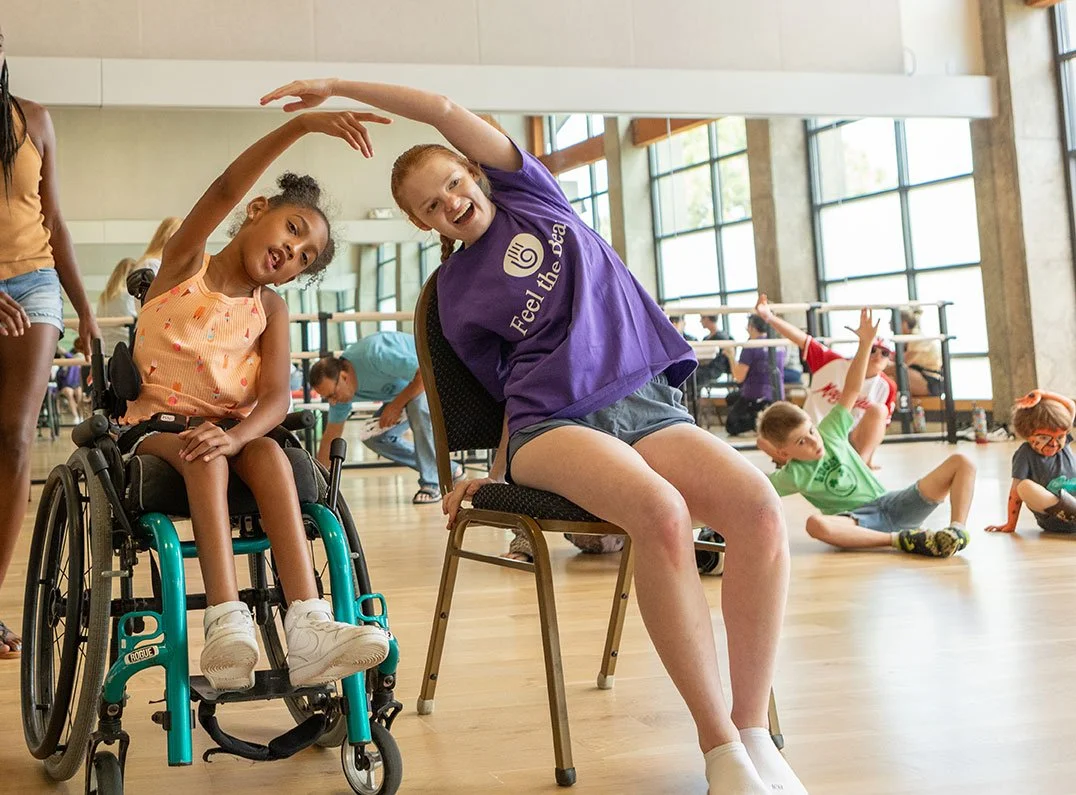
Feel the Beat instructor, Sarah Thomas, during the Feel the Beat Open House Event in 2024.
Today, we’re highlighting Feel the Beat dance instructor Sarah Thomas and her inspiring journey as a dancer and teacher living with Postural Orthostatic Tachycardia Syndrome (POTS).
Sarah shares how her diagnosis reshaped her relationship with movement, why adaptive dance matters, and how she helps create inclusive spaces through Feel the Beat.
Living with Postural Orthostatic Tachycardia Syndrome (POTS)
When I first started experiencing debilitating Postural Orthostatic Tachycardia (POTS) symptoms, I wasn’t sure how I could continue to enjoy movement. If you aren’t familiar with it, POTS is a condition that causes a number of symptoms when you transition from lying down to standing up, such as a fast heart rate, dizziness, and fatigue. I’ve been a dancer and cheerleader my whole life, and I would attend practices, classes, and rehearsals almost every day growing up. In contrast, with POTS, getting out of bed and doing basic tasks would cause me to faint, flare, and become exhausted for days after. I had to rearrange my life and future around this new diagnosis. Through Feel the Beat, I’ve learned that experiencing and enjoying dance can look different for everyone. I did not need to fit into a certain mold to be a dancer, an athlete, or be active. While teaching with Feel the Beat, I have learned how movement can be reimagined from what people view as conventional to meet diverse needs and create art, building and fostering an inclusive space where the intersection of artistry through movement can thrive, benefiting all individuals and the dance community in general.
From Cheerleading to Adaptive Dance
After my first COVID-19 infection in 2022, I started progressively developing POTS symptoms. By 2023, I was passing out and feeling extremely ill when I stood up and walked, making managing my symptoms and cheerleading extremely difficult. After my first season in collegiate cheerleading, I knew I needed to take a break to focus on my health. Throughout my life, I found identity in being a dancer or a cheerleader, so it was really disorienting to lose that constant. I had difficulty finding accessible activities I liked doing and was able to do without feeling sick. When watching the new Barbie movie that came out in 2023, the “Dance the Night” choreography featured seated dancers. The dance number had such energy and was much more joyful as a result of inclusivity! This inspired me to create seated choreography to the song! I realized that I loved creating seated choreography and learning about Para Dance Sport! Coming from a background as a tumbling coach, I knew I already loved teaching others. Feel the Beat was an exciting opportunity to learn more about different movements, and it unleashed a whole new level of creativity for me. During teaching training and currently, I am always learning about new ways to adapt different moves while sitting down! As someone with an invisible disability, I really appreciated Feel the Beat fostering an open and non-judgmental space to dance; however, it was accessible for me that day with my varying symptoms. Whether that was dancing seated, standing, or somewhere in between!
Growing Up in an Inclusive Household
My journey with adaptive dance did not start with my POTS diagnosis; I grew up with both of my sisters having profound sensorineural hearing loss—me being in the middle! At home, I grew up communicating in both ASL (American Sign Language) and English. In Elementary and Junior High, I attended a magnet school with my two sisters, for students who are Deaf and Hard of Hearing. In school, I was able to further my ASL skills, as most of my classes had ASL interpreters and English instruction. Mountain View Elementary was 30 minutes away from home, but many other schools in Colorado were not well-funded or well-equipped to provide inclusive and accessible education. I was also able to be in an inclusive classroom with peers of all abilities, meaning I could use ASL every day in school! At Mountain View, Feel the Beat’s founders, Jari and Julia, were my little sister’s teachers.
Discovering Accessible Dance at Feel the Beat
My sisters and I had danced at studios before, but most spaces weren’t fully accessible. Through school, we learned about Feel the Beat, where my sister and I were finally able to take classes together in an inclusive environment.
Accessibility isn’t just about allowing people into a space—it’s about creating accommodations that ensure every dancer can be fully included.
When I began teaching with Feel the Beat, I had to adjust to signing while teaching dance. Learning ASL dance vocabulary was challenging but rewarding.
Learning to Dance with Feel the Beat’s Vibrotactile Dance Floor
One of the most impactful tools at Feel the Beat is the vibrotactile dance floor, which allows dancers to feel music through vibrations.
During training, learning how to incorporate the floor into my classes gave me an in-depth understanding of beat and rhythm. I was always a dancer who would go too fast and would get lost just enjoying the music while dancing. But using the floor has helped me stay grounded and calm while dancing. I think the floor is a great tool for dancers who are Deaf and Hard of Hearing (DHH), individuals with sensory needs, and for every dancer.
It’s not just helpful for dancers who are Deaf or Hard of Hearing (DHH), but also for individuals with sensory needs and for every dancer learning to connect to beat and rhythm.
Why Inclusive Dance Matters
Throughout history, dance has broken down barriers by including diverse voices in the creative process.
Adaptive and inclusive dance:
Strengthens cultural connections
Builds social belonging
Improves physical and emotional health
When spaces like Feel the Beat ensure everyone can fully participate, dance thrives, and so does society.
Conclusion: Moving Forward with POTS and Adaptive Dance
Living with POTS changed the way I dance, but it also gave me new ways to create, teach, and share movement. At Feel the Beat, I’ve learned that dance can be adapted to meet every body’s needs—whether seated, standing, or in between.
Inclusive dance isn’t just about accessibility; it’s about artistry, community, and joy.
About Feel the Beat
Feel the Beat is a 501c3 nonprofit and dance studio dedicated to making the experience of dance and music possible for all, including those who are Deaf, Hard of Hearing, as well as those with/without disabilities. So much more than a dance studio, we offer a variety of programming for all levels, ages, and abilities, including classes for individuals, groups, schools, and events. Our carefully crafted curriculum engages the senses, strengthens muscle groups, improves coordination, and teaches the fundamentals of music, dance, and choreography, while connecting to the music through our bone conduction vibrational dance floor. Learn more about our classes for individuals, private groups, and schools at https://www.feelthebeat.dance/adaptive-dance-programs.
Learn more about Feel the Beat’s Bone Conduction Dance Floor Technology
At Feel the Beat, our studio features a one-of-a-kind vibrotactile dance floor that transforms sound into gentle, full-body vibration. Using embedded bone-conduction technology, the floor allows dancers of all abilities, including those who are Deaf or Hard of Hearing, Blind or low vision, on the Autism Spectrum, with Intellectual or Developmental Disabilities, or with physical disabilities, to feel music through their feet and bodies in a natural, immersive way.
Designed with multiple layers for comfort, mobility, and sensory access, the system welcomes dancers in socks, shoes, or wheelchairs. This innovative flooring helps every dancer connect to rhythm and experience movement in a powerful, inclusive environment. Learn more about our floor technology here: Vibrotactile Dance Floor For Studios. & Venues.
Learn how you can partner with Feel the Beat to leverage our mobile floor, semi-permanent, or permanent flooring options by emailing us today at info@feelthebeat.dance.