Kinesiology and How We Incorporate It into Dance Accessibility at Feel the Beat

Feel the Beat instructor, Corey O’Keefe, during the Feel the Beat Urban Jazz Dance Workshop led by Antoine Hunter and Zahna Simon of Urban Jazz Dance Company.
At Feel the Beat, we believe dance should be accessible to everyone. Behind that mission is a deep understanding of kinesiology, the study of how people move. By examining muscles, joints, and body mechanics, kinesiology gives us the tools to make dance both safe and inclusive. Inclusive dance is more than creating adaptations of movements, but understanding how each movement matters.
In this blog post, Feel the Beat instructor Corey O'Keefe shares her background and experience with kinesiology and how she helps apply that knowledge into her instruction techniques.
Merging Science and Art Through Movement
My background in kinesiology has changed the way I see dance. It’s not just about perfect technique or memorizing steps—it’s about empowering every dancer to explore their own range of motion and connection to their body, the music, and the world around them. In my classes, this principle guides every choice, from warm-ups to moving across the studio. Through this blend of art and science, we create a space where movement isn’t limited by ability, it’s reimagined by it.
Core Principles of Kinesiology
Kinesiology equips dance educators with the knowledge to create body-aware, accessible instruction. At Feel the Beat, our teaching is guided by these foundational principles:
Movement Mechanics: Understanding how muscles work together and how joints align helps us identify the most effective and safest ways for students to move.
Balance: Balance is key to control and expression. By focusing on core engagement and a grounded base, dancers can find stability even if their balance looks different from others. (Proprioception: the body’s awareness of where it is in space.)
Coordination: Coordination requires multiple body parts to work together. Using rhythmic cues, touch, and visual markers helps dancers of varying abilities stay connected to the music. Our bone-conductive floor enhances natural proprioception by allowing dancers to feel the beat through their bodies.
Muscle Use and Control: Dance relies on both gross motor control (large movements like jumps and spins) and fine motor control (precise gestures of the hands, eyes, or head). Coordinating these muscle groups creates stability, mobility, and expression simultaneously.
Understanding Different Bodies and Movement Ranges
No two dancers move the same way. Kinesiology reminds us that every person’s range of motion, strength, and mobility is unique. Our role is to celebrate that diversity and adapt accordingly.
Range of Motion: Flexibility is influenced by anatomy, prior injuries, and neuromuscular control. We focus on functional movement—what feels safe, strong, and expressive for each dancer.
Muscle Activation and Fatigue: Knowing how muscles engage and tire helps prevent overuse injuries. Alternating muscle groups in sequences builds endurance safely. For example, combining expressive upper-body movements with rhythmic lower-body motions activates multiple muscle groups while reducing strain.
Body Awareness and Kinesthetic Learning: Dancers develop alternate pathways to sense movement, using vibration, tactile feedback, or mirrored visuals. These sensory cues support diverse learning styles and help every dancer experience success.

Adapting Movement for Safety and Empowerment
A core principle of kinesiology is injury prevention. This is crucial in adaptive dance, where participants may face challenges with balance, coordination, or joint stability. At Feel the Beat, we focus on:
Proper joint alignment to avoid strain
Gradual progression of movement intensity
Awareness of student fatigue
Purposeful cool-downs to maintain flexibility and cardiovascular recovery
Kinesiology in Action at Feel the Beat
Adapting Choreography for Accessibility
Every adaptation begins with one question: What is the intention of this movement? Kinesiology helps us find the safest, most expressive way for each dancer to achieve it:
A high leap may become a dynamic arm reach for a wheelchair user, maintaining the feeling of stretch and energy.
A turn might transform into a directional shift or head rotation for a student with balance challenges, keeping rhythm and emotional quality intact.
A floor-based movement can be explored from a seated position, allowing dancers to engage with shape, rhythm, and energy while feeling the music through the vibrational floor.
Rather than simplifying movements, we preserve meaning and musicality, ensuring full inclusion in the creative process.
Connecting the Science of Motion with the Art of Expression
At Feel the Beat, our instructors constantly bridge evidence-based practice with creativity. We use biomechanical principles to break down complex moves into teachable components. Motor learning theory—through repetition, feedback, and visualization—reinforces skill development. Sensory integration strategies combine tactile, visual, and vibrational cues so that all students can access rhythm and timing. Each adaptation is grounded in kinesiology but inspired by artistry. By actively incorporating these practices into dance education, we create choreography that is safe, expressive, and uniquely inclusive.
Safety and Injury Prevention: By teaching alignment, warm-ups, and muscle control rooted in kinesiology, we minimize strain and overuse injuries. Students learn why certain techniques protect their joints or improve balance, helping to build self-advocacy and lifelong body awareness.
Confidence and Emotional Expression: When dancers understand their body mechanics, they move with greater confidence. This confidence extends beyond the studio, reinforcing self-esteem, independence, and positive body image.
Strength and Endurance: Defining an area of dance as “accessible” does not mean it cannot be challenging. Through thoughtful conditioning and repetition, dancers build muscular endurance, cardiovascular health, and coordination—all guided by the science of movement.
Neuromuscular and Cognitive Benefits: Research shows that dance enhances neuroplasticity, the brain’s ability to form new connections as we learn. By combining rhythm, coordination, and sensory feedback, our classes support not only physical health but also cognitive engagement and emotional regulation.
Community and Inclusion: Perhaps the most powerful benefit of kinesiology-informed dance is how it cultivates shared understanding. When instructors adapt choreography using scientific insight paired with creative talents, dancers of all abilities can move together in sync, fostering empathy, inclusion, and true community.
Benefits for Students: Empowering Through Movement Science
When kinesiology informs dance instruction, students gain more than physical improvement—they gain confidence, self-awareness, and joy.
Safety and Injury Prevention: Teaching alignment, warm-ups, and muscle control reduces strain and helps dancers advocate for their own bodies.
Confidence and Emotional Expression: Understanding body mechanics empowers students to move with confidence, reinforcing self-esteem and positive body image.
Strength and Endurance: Accessible dance can still be challenging. Thoughtful conditioning builds muscular endurance, cardiovascular health, and coordination.
Neuromuscular and Cognitive Benefits: Dance enhances neuroplasticity, supporting brain development, coordination, and emotional regulation.
Community and Inclusion: Science-informed, creatively adapted choreography fosters empathy, inclusion, and connection among dancers of all abilities.
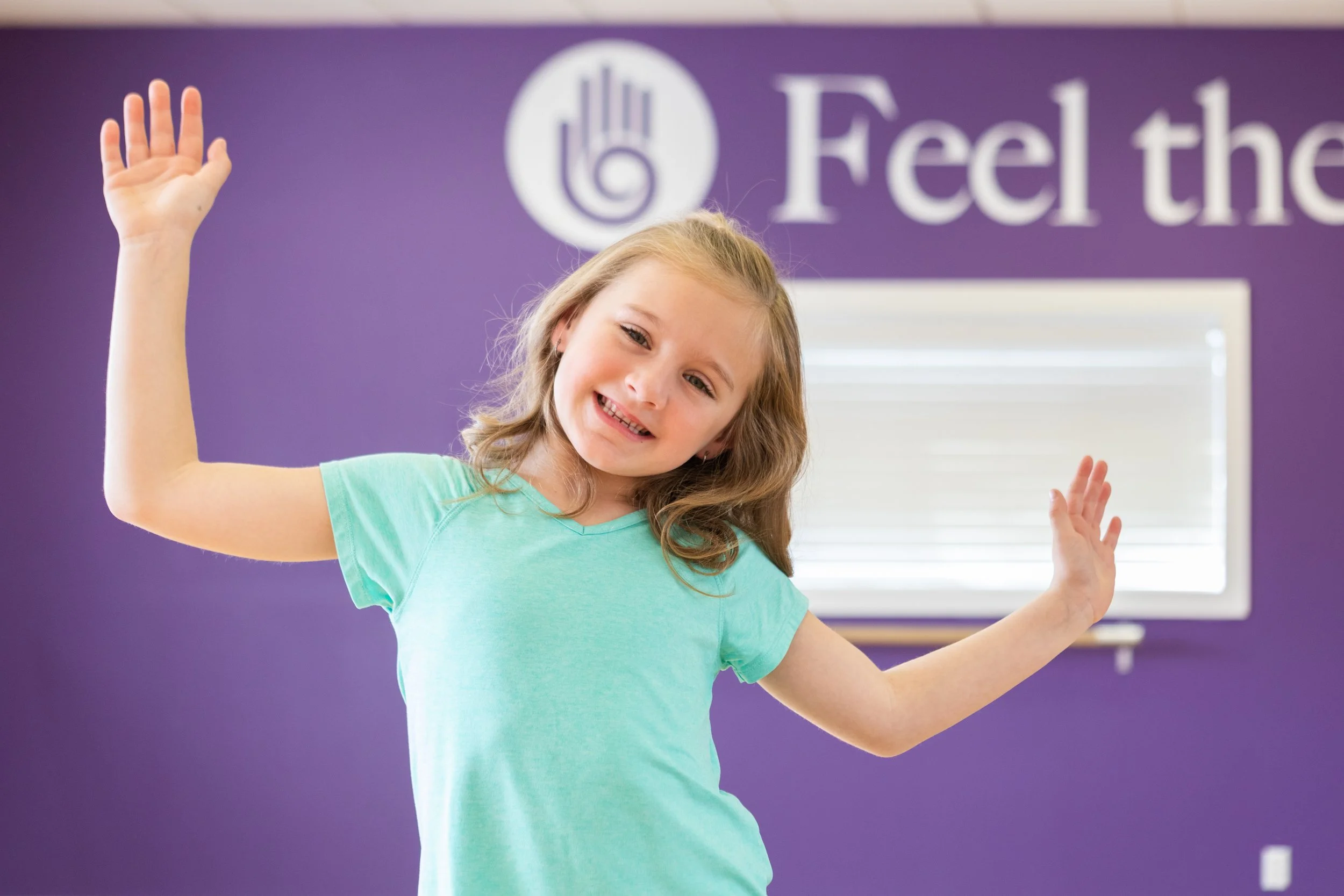
Why Kinesiology Matters for Accessible Dance
As one of the few adaptive dance studios in Colorado, Feel the Beat bridges science and art to create inclusive education. By applying kinesiology principles in classes, workshops, and outreach, we hope to inspire other teachers and studios to make movement spaces more accessible. The more we understand how our bodies move, the more inclusive our dance communities can become.
Conclusion: Moving Forward with Purpose
Kinesiology gives us the how of movement, while dance gives the why. At Feel the Beat, blending the two allows dancers of all abilities to move safely, express themselves fully, and feel the joy of music. Together, science and art make dance truly accessible for everyone.
References
Christie, M. R., et al. (2025). Impact of an Adaptive Dance Program on Physical Abilities and Psychosocial Well-Being of Youth With Cerebral Palsy: A Case Series. Pediatric Neurology, 169, 74–80. https://doi.org/10.1016/j.pediatrneurol.2025.05.007
Long, K. L., et al. (2021). The Impact of Dance-Specific Neuromuscular Conditioning and Injury Prevention Training on Motor Control, Stability, Balance, Function, and Injury in Professional Ballet Dancers: A Mixed-Methods Quasi-Experimental Study. International Journal of Sports Physical Therapy, 16(2), 404–417. https://doi.org/10.26603/001c.21150
Ngo, J.K., et al. (2024). Strength and conditioning in dance: A systematic review and meta-analysis. European Journal of Sport Science, 24, 637–652. https://doi.org/10.1002/ejsc.12111
Watson, T., et al. (2017). Dance, Balance, and Core Muscle Performance Measures Are Improved Following a 9-Week Core Stabilization Training Program Among Competitive Collegiate Dancers. International Journal of Sports Physical Therapy, 12(1), 25–41.
About Feel the Beat
Feel the Beat is a 501c3 nonprofit and dance studio dedicated to making the experience of dance and music possible for all, including those who are Deaf, Hard of Hearing, as well as those with and without disabilities. So much more than a dance studio, we offer a variety of programming for all levels, ages, and abilities, including classes for individuals, groups, schools, and events. Our carefully crafted curriculum engages the senses, strengthens muscle groups, improves coordination, and teaches the fundamentals of music, dance, and choreography, while connecting to the music through our bone conduction vibrational dance floor. Learn more about our classes for individuals, private groups, and schools at https://www.feelthebeat.dance/adaptive-dance-programs.
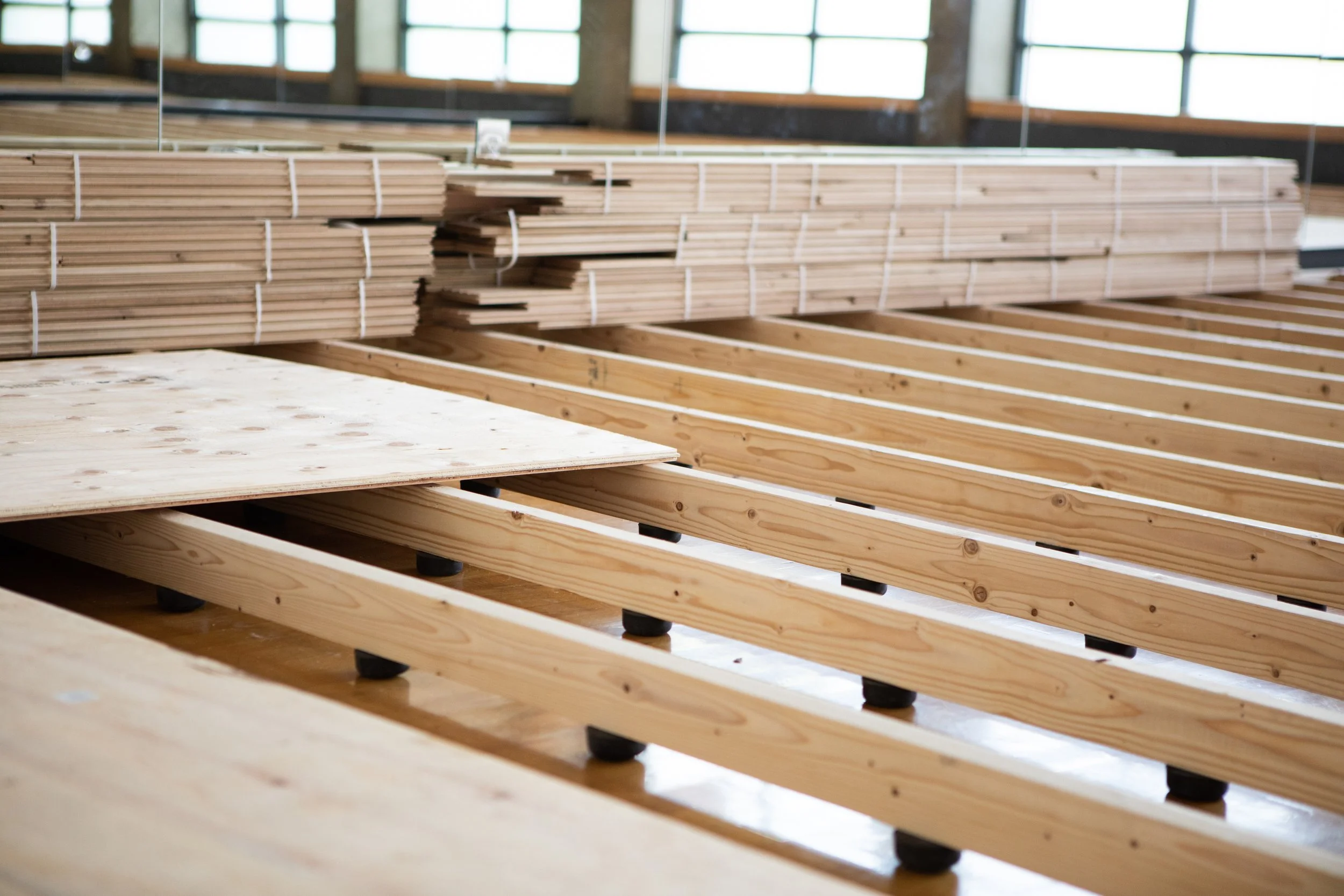
Learn more about Feel the Beat’s Bone Conduction Dance Floor Technology
At Feel the Beat, our studio features a one-of-a-kind vibrotactile dance floor that transforms sound into gentle, full-body vibration. Using embedded bone-conduction technology, the floor allows dancers of all abilities, including those who are Deaf or Hard of Hearing, Blind or low vision, on the Autism Spectrum, with Intellectual or Developmental Disabilities, or with physical disabilities, to feel music through their feet and bodies in a natural, immersive way.
Designed with multiple layers for comfort, mobility, and sensory access, the system welcomes dancers in socks, shoes, or wheelchairs. This innovative flooring helps every dancer connect to rhythm and experience movement in a powerful, inclusive environment. Learn more about our floor technology here: Vibrotactile Dance Floor For Studios. & Venues.
Learn how you can partner with Feel the Beat to leverage our mobile floor, semi-permanent, or permanent flooring options by emailing us today at info@feelthebeat.dance.